Last updated: 13 November 2026
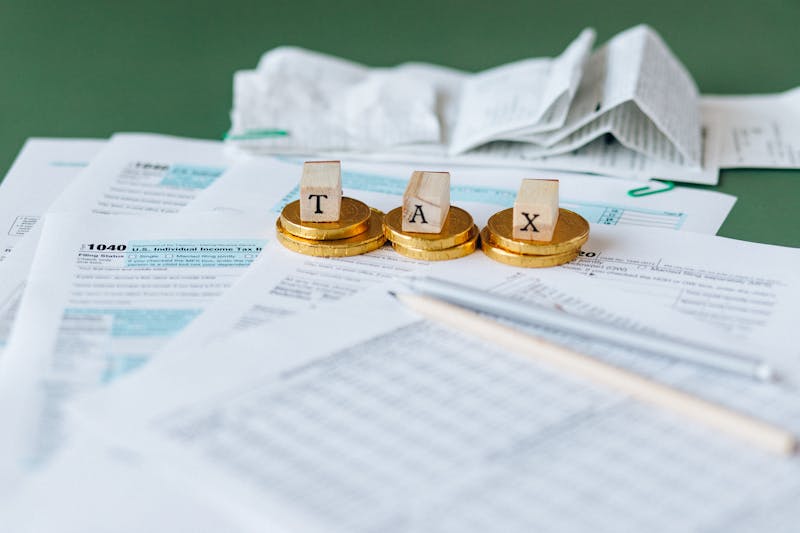
 Photo on Pexels.
When starting a business in Australia, choosing your business structure is one of the most critical decisions you will make.
Your structure determines how much tax you pay, how much paperwork you have to complete each year, your personal legal liability if something goes wrong, and how easy it is to access the money your business earns.
In this guide, we break down the four common Australian business structures, provide a direct comparison between the two most popular options (Sole Trader vs Company), and explain how to decide what makes sense for your business.
Overview of the Four Australian Business Structures
Under statutory guidance from business.gov.au Business structures and types and the Australian Taxation Office (ATO) Business structures guide:
- Sole Trader: An individual trading in their own right. You are legally responsible for all aspects of the business, including debts and profits.
- Partnership: An agreement between two or more individuals or entities who distribute profits and share liabilities according to an agreed percentage under relevant state partnership legislation.
- Proprietary Limited Company (Pty Ltd): An incorporated commercial entity registered under the Corporations Act 2001 (Cth) that exists as a separate legal person from its owners and directors.
- Trust: A legal structure where a trustee (an individual or company) holds property or income for the benefit of named beneficiaries. Trusts are common for complex asset protection and wealth distribution, but involve higher legal establishment and administrative maintenance costs.
For more than 95% of Australian service contractors, tradies, cleaners, and technical freelancers starting out, the core decision comes down to Sole Trader versus Pty Ltd Company.
Sole Trader vs Pty Ltd Company: Head-to-Head Comparison
Company registration and corporate oversight in Australia are administered by the Australian Securities and Investments Commission (ASIC) under the Corporations Act 2001.
Here is how operating as an unincorporated sole trader compares directly against an incorporated proprietary company:
| Decision Factor | Sole Trader | Proprietary Limited Company (Pty Ltd) |
|---|---|---|
| Legal Status | You and the business are legally the same person. | The company is a distinct legal entity separate from you. |
| Initial Setup Cost | $0 (free ABN application on abr.gov.au). | $576+ in statutory ASIC registration fees plus professional setup costs. |
| Ongoing Admin Fees | $0 to the government. | $321 annual ASIC review fee, plus company secretarial administration. |
| Personal Liability | Unlimited liability. If the business is sued or owes money, your personal assets (home, car, savings) are exposed. | Limited liability. Shareholders are generally only liable for debts up to the unpaid value of their shares. |
| Tax Returns | One single annual tax return (business income and deductions are reported on your individual return). | Separate annual company tax return, plus your own personal tax return. |
| Tax Rates | Individual marginal tax rates (from 0% up to 45% plus Medicare levy). Tax-free threshold applies ($18,200). | Flat corporate tax rate (currently 25% for eligible base rate small businesses). No tax-free threshold. |
| Accessing Cash | You can transfer money from the business account to personal accounts freely at any time (drawings). | Company money belongs strictly to the company. You must pay yourself via payroll (STP), director fees, or dividends. |
1. Legal Liability and Asset Protection
Asset protection and commercial risk principles are outlined under business.gov.au Legal essentials for business:
Sole Trader
As a sole trader, there is no legal separation between you and your business. If your business is sued for property damage, or if you sign a commercial lease or supplier credit account and cannot pay, creditors can pursue your personal assets, including your family vehicle, personal bank accounts, and home equity.
- How sole traders manage risk: Comprehensive public liability insurance, professional indemnity insurance, and tool/equipment insurance are essential safeguards that protect sole traders from everyday operational risks.
Company (Pty Ltd)
A company provides limited liability protection. If the company incurs debts or is involved in legal disputes, liability is generally confined to the company's own assets.
- The Reality of Personal Guarantees: For new small businesses, banks, vehicle financiers, and commercial landlords almost always require directors to sign a personal guarantee before approving loans or leases. If you sign a personal guarantee, you remain personally liable for those specific debts regardless of the corporate structure.
2. Tax Treatment and the Personal Services Income (PSI) Trap
A common misconception among new contractors is that forming a company automatically allows them to pay the flat 25% corporate tax rate instead of individual marginal tax rates. Under Australian tax law, this is often not the case.
Personal Services Income (PSI) Rules
Personal services income is strictly regulated under Part 2-42 of the Income Tax Assessment Act 1997 (Cth) and detailed in ATO Personal Services Income (PSI) guidelines and Taxation Ruling TR 2001/7:
- If more than 50% of the income you earn on a contract is derived directly from your personal labour, skills, or specialised expertise (rather than from hiring staff or using heavy capital equipment), that income is classified as Personal Services Income.
- When income is classified as PSI and you do not pass specific ATO exemption tests (such as the results test or unrelated clients test), the income cannot be retained within a company at the 25% tax rate.
- Instead, the ATO requires that income to be attributed directly to you as an individual and taxed at your individual marginal income tax rates.
For individual consultants, programmers, cleaners, and solo trade contractors who sell their own time and skill, a company structure often provides zero corporate tax advantage.
3. Managing Money and Day-to-Day Banking
Corporate withdrawals and payroll compliance are governed by the ATO and the Corporations Act 2001:
Sole Trader
Managing business funds as a sole trader is simple:
- All net profit earned by the business belongs to you.
- You can transfer money between your business bank account and personal savings whenever you wish. These transfers are called "drawings" and are not subject to formal payroll reporting.
- You pay income tax on the total net business profit earned during the financial year, regardless of how much you withdrew for personal expenses.
Company
In a company, money deposited into the company account belongs to the corporate entity:
- Taking money out of the company bank account for personal use without formal documentation can violate the Corporations Act and create severe deemed dividend tax penalties under Division 7A of the Income Tax Assessment Act 1936 (Cth) and ATO Division 7A loans guidance.
- To pay yourself, the company must register for Pay As You Go (PAYG) Withholding, run official payroll reported to the ATO via Single Touch Payroll (STP), pay compulsory superannuation guarantee contributions, or issue formal dividends with franking credits.
Which Structure Should You Choose?
Starting as a Sole Trader is Generally Best If:
- You are starting out on your own as an independent contractor, tradie, cleaner, or consultant.
- Your expected net annual profit is under $100,000.
- You want to keep setup costs and annual accountancy fees to a minimum.
- You have appropriate public liability and professional insurance to cover your operational risks.
- Your work consists primarily of your own personal labour and skills (PSI applies).
Moving to a Company Makes Sense When:
- You employ multiple staff members or engage a continuous team of subcontractors.
- You are taking on major commercial contracts that legally require contractors to be incorporated.
- Your business incurs significant commercial debts, inventory risk, or substantial equipment leases.
- Your business generates profits well beyond your personal living needs, allowing you to legally retain profits within the business for future capital investments.
Can You Change Structures Later?
Yes. Under ATO guidance on changing your business structure and business.gov.au transition pathways, you can restructure as your operations expand.
Many of Australia's most successful small businesses started out as simple sole proprietorships. As your revenue expands, you take on staff, or your operational risks increase, your accountant or registered tax agent can help you transition your operations into a Proprietary Limited Company.
Starting simple keeps your initial costs low and lets you focus on finding clients, delivering quality work, and building consistent cash flow.
Related Articles

How Much Tax Should a Sole Trader Save in Australia?
Stop stressing at EOFY. Learn the rules of thumb for saving for income tax and GST as a Sole Trader, and how to automate the process.
Understanding Sole Trader Income Tax (2026)
A complete guide to understanding income tax as a sole trader in 2026.
What is a Tax Invoice in Australia? (ATO Requirements)
Learn what a tax invoice is in Australia, the 7 ATO requirements, and the difference between a standard invoice and a tax invoice for sole traders.
Disclaimer: The information provided in this article is for general educational purposes only and does not constitute professional tax, legal, or financial advice. Taxation laws are complex and subject to change. Because this information has been prepared without considering your specific business objectives, financial situation, or needs, you should consult with a registered Tax Agent or BAS Agent before making any decisions based on this content. Invoice-buddy is a software provider, not a registered tax practitioner.