Last updated: 14 November 2026
For an Australian sole trader, freelancer, or tradie, hitting $75,000 in gross sales is a genuine milestone. It usually means your business has steady clients, repeat work, and positive momentum. But without planning ahead, that growth can trigger a sudden cash crunch.
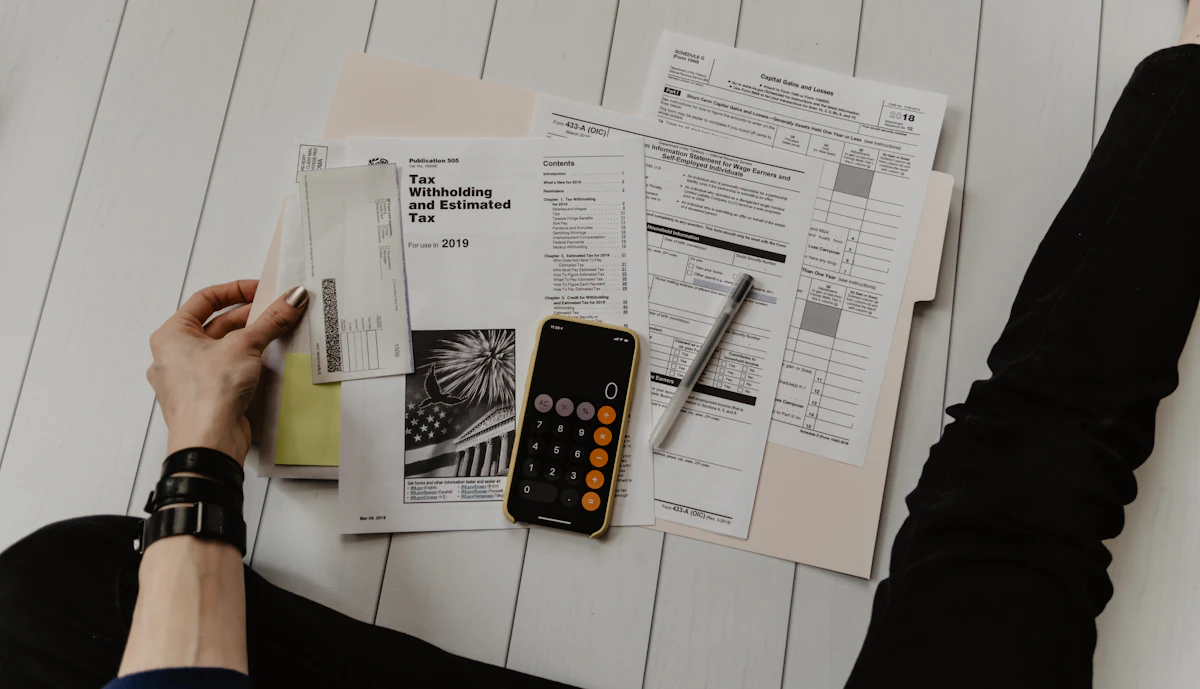
Photo by Kelly Sikkema on Unsplash
The Australian Taxation Office (ATO) requires any business with a GST turnover of $75,000 or more to register for Goods and Services Tax (GST)1.
The trouble is that the $75,000 threshold catches many independent operators by surprise. A lot of sole traders assume the limit is based on taxable profit, or that it resets neatly on 1 July each year. In reality, the ATO looks at your gross turnover on a continuous rolling 12-month basis2.
If you cross that threshold without updating your quotes and invoices, you risk paying thousands of dollars in uncollected GST directly out of your own bank account.
Here is how the rules work, what the numbers look like in practice, and how to protect your profit margins when crossing the threshold.
Key Takeaways
- Gross turnover, not net profit: The $75,000 threshold applies to your total sales before deducting business expenses, subcontractor costs, or tool purchases2.
- The rolling 12-month rule: You cannot wait until end of financial year. You must track your income across a rolling 12-month window: looking back at the past 11 months plus the current month, or looking forward 11 months2.
- The 21-day registration window: Once you exceed or project exceeding $75,000, you have exactly 21 days to register for GST with the ATO1.
- The 1/11th haircut: If you fail to add 10% GST to your invoices, the ATO treats the money you received as GST-inclusive, which wipes out roughly 9.1% of your gross earnings.
- B2B vs B2C quoting: Business clients can claim GST credits back, so adding GST rarely bothers them. For residential homeowners and consumers, adding 10% is a visible price increase that requires careful communication.
1. Turnover vs Profit: The Misunderstanding That Costs Money
The most common trap for sole traders is confusing gross turnover with net profit.
Suppose you run a mobile trade business, an electrical contracting service, or an online design consultancy. Over 12 months:
- You invoice clients for a total of $85,000.
- You spend $22,000 on materials, subcontractor help, equipment depreciation, and running your ute.
- Your net taxable income is $63,000.
Because your taxable earnings are below $75,000, you might assume you do not need to register for GST.
Under tax law, that assumption is incorrect. The ATO measures GST turnover based on your gross business earnings2. In this example, your turnover is $85,000, which puts you $10,000 over the threshold. Your operational expenses do not reduce your GST turnover calculation.
(Note: If you provide taxi, limousine, or ride-sourcing services such as Uber, the $75,000 threshold does not apply to you. The ATO requires you to register for GST from your very first dollar of fares1).
2. How the Rolling 12-Month Rule Works
Many business owners think GST is an annual EOFY check. They expect their accountant to review their numbers at tax return time in October and tell them whether they need to register.
Waiting for your tax agent is dangerous because the ATO applies two rolling tests2:
Test 1: Current GST Turnover (Looking Backward)
Calculate your gross business income for the current month, then add the income from the previous 11 months. If that 12-month total hits or passes $75,000, you have crossed the threshold.
Test 2: Projected GST Turnover (Looking Forward)
Calculate your income for the current month, then project your anticipated business income for the next 11 months. If your contracts, booked jobs, or regular retainer clients indicate you will make $75,000 or more over that period, you meet the requirement immediately.
For example, imagine you are a sole trader earning an average of $5,000 per month. In month eight, you sign a commercial maintenance contract worth $30,000 over six months. Your projected turnover for the next 11 months now exceeds $75,000.
Under ATO guidelines, you cannot wait until the $30,000 lands in your bank account. You must register within 21 days of knowing you will reach the threshold1.
3. The Real-World Maths: The 1/11th Cash Hit
What happens if you cross the threshold, do not register, and keep sending regular invoices without GST?
Under Australian tax law, once you are required to be registered, the ATO treats every dollar you collect as inclusive of GST. Because GST is 10% on top of a net price, the GST portion of a total invoice figure is exactly one-eleventh (1/11th), or approximately 9.09%4.
Here is how that plays out over a year of billing:
| Scenario | Invoiced Amount | GST Remitted to ATO | Money Kept by Business | Net Difference |
|---|---|---|---|---|
| Unregistered (Under $75k) | $70,000 | $0 | $70,000 | Standard baseline |
| Over $75k, Added 10% GST | $88,000 ($80k + $8k GST) | $8,000 | $80,000 | Full revenue protected |
| Over $75k, Forgot GST | $80,000 (Treated as GST-inclusive) | $7,273 (1/11th) | $72,727 | -$7,273 out-of-pocket |
In the third scenario, failing to register and adjust pricing means handing over $7,273 of hard-earned revenue directly to the tax office.
You cannot easily go back to past clients months later to demand an extra 10% on settled jobs. In almost every case, that money comes straight out of your own pocket.
4. Quoting Defensively: Business Clients vs Consumers
When you register for GST, how you adjust your pricing depends heavily on who hires you.
Working with Other Businesses (B2B)
If you do subcontracting, corporate consulting, creative work for agencies, or commercial trade repairs, GST is straightforward.
Your business clients are almost certainly registered for GST themselves. They simply claim back the 10% GST you charge as an input tax credit on their own Business Activity Statement (BAS)3.
When you quote a business client:
- Quote your standard rate plus GST (for example, "$1,500 + GST" or "$1,650 including GST").
- To that client, the net cost remains $1,500. It does not increase their net expense.
Working with the Public (B2C)
If you provide services directly to everyday consumers, such as residential plumbing, domestic house cleaning, personal training, or wedding photography, the situation is different.
Everyday consumers cannot claim GST back. To a homeowner, a quote going from $1,000 to $1,100 is a real 10% price rise.
To protect your business when approaching the $75,000 threshold:
- Factor GST into your rate increases early: If your schedule is full and your rolling turnover is climbing past $60,000, implement small, incremental rate increases before crossing the line.
- Break down your quotes: Clearly itemise materials and labour on your quotes and invoices. Customers are often more receptive to material costs that reflect supplier GST.
- Be transparent on formal quotes: State your pricing clearly with GST included, as Australian Consumer Law requires all retail consumer pricing to display the total inclusive price.
5. What Changes in Your Daily Admin
Registering for GST introduces three practical changes to your routine:
1. Invoices Become Tax Invoices
Once registered, you can no longer send plain invoices. You must issue valid ATO "Tax Invoices" within 28 days of a customer request4.
A compliant tax invoice must clearly display:
- The words "Tax Invoice" prominently at the top.
- Your business or trading name and your Australian Business Number (ABN).
- The date of issue.
- A clear description of the services or goods provided.
- The GST amount shown separately, or a clear statement that the total price includes GST.
- For sales of $1,000 or more, the buyer's identity or ABN4.
2. Claiming Input Tax Credits
Registration is not all one-way traffic. The major upside of being GST-registered is that you can claim back the GST included in your business expenses3.
Every time you buy trade tools, timber, office equipment, software subscriptions, or petrol for your work ute, you pay 10% GST. On your BAS, you offset that GST against the GST you collected from clients.
If you collected $3,000 in GST from clients this quarter but paid $1,200 in GST on materials and equipment, you only remit $1,800 to the ATO.
3. Lodging Your Business Activity Statement (BAS)
Most sole traders lodge their BAS quarterly5. Your BAS reports your total sales, the GST collected, and the GST credits claimed on expenses.
The easiest method for sole traders is the cash accounting method. You only report GST on invoices your clients have actually paid, and on expenses you have actually paid for, during that quarter.
6. How Time-Poor Sole Traders Can Stay Ahead
When you spend your days on site, on the road, or dealing with clients, bookkeeping is usually the last thing you want to do at night. You do not need complex software or hours of bookkeeping to avoid the GST cliff.
Here is a straightforward routine to keep your finances safe:
- Check your monthly average at the $60k mark: If your monthly revenue consistently hits $5,500 to $6,000, you are on track to reach $70,000 to $75,000 over 12 months. That is your signal to review your quotes and prepare for registration.
- Open a separate tax buffer account: The golden rule of GST is never treating tax collected as your own revenue. Set up a dedicated high-interest business sub-account. Every time a client pays an invoice, immediately transfer 10% into that account. When your quarterly BAS arrives, the cash is already waiting.
- Keep tax invoices for every purchase over $82.50: To claim GST credits on business expenses, you must have a valid tax invoice from the supplier4. Snap a photo of physical receipts or keep digital receipts in a single folder so you do not miss deductions at BAS time.
- Consider voluntary registration: If you have high startup expenses, buy expensive trade machinery, or deal almost entirely with B2B clients, registering for GST voluntarily before hitting $75,000 can be beneficial1. It allows you to claim GST refunds on equipment immediately.
Summary
Crossing the $75,000 threshold is a positive sign that your business is succeeding. By understanding that the ATO measures gross turnover on a rolling 12-month schedule, you can update your pricing before the 21-day registration clock catches you unprepared. Setting up a dedicated tax account and issuing clean tax invoices ensures your extra revenue stays where it belongs: in your business.
References
- ATO: Registering for GST and the 21-day rule
- ATO: Working out your GST turnover
- ATO: Claiming GST credits (input tax credits)
- ATO: Tax invoices and requirements
- ATO: Business Activity Statements (BAS)
Related Articles

Choosing the Right Business Structure: Sole Trader vs Company
Sole trader, company, or partnership? Learn the pros, cons, tax differences, and liability implications for Australian small businesses.

How Much Tax Should a Sole Trader Save in Australia?
Stop stressing at EOFY. Learn the rules of thumb for saving for income tax and GST as a Sole Trader, and how to automate the process.
Understanding Sole Trader Income Tax (2026)
A complete guide to understanding income tax as a sole trader in 2026.
Disclaimer: The information provided in this article is for general educational purposes only and does not constitute professional tax, legal, or financial advice. Taxation laws are complex and subject to change. Because this information has been prepared without considering your specific business objectives, financial situation, or needs, you should consult with a registered Tax Agent or BAS Agent before making any decisions based on this content. Invoice-buddy is a software provider, not a registered tax practitioner.